

SOUND CONTROL THE MIND
Lets hear

Many recordings I made myself with professional equipment do proof it: one layer for the mind control in use is SOUND. It is not all the story, but it needs attention.
Maybe the sound is created by the pulses hitting the brain. But then it is not high speed pulsing. Maybe it is the middle frequency in two ultrasound streams. And is that sound hidden in a transport layer.
Vibrations. Low Frequencies, ELF. I showed you the analyzing image before. The other is electricity. Somehow they managed to transport that like long wave radio, and the brain is decoding the signal. It is transporting the signal in classic style but more as a sound signal it is directional.
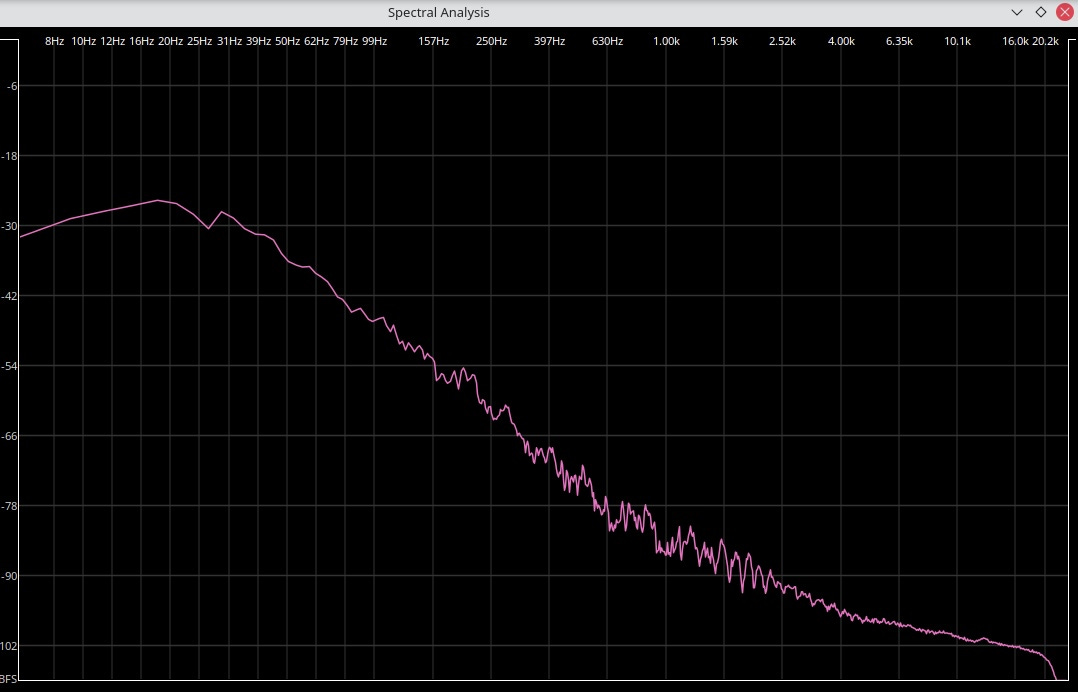
S O U N D
In the interviews with CIA victim Alice: SOUND.
That sound is capable for doing the entrainment (that is the the connection, the synchronization with your mind) is already known. Listen to music and you feel it happening.
Sound can introduce sleep, fear, anxiety, and sexual arousal, it can be done with low frequency sound, ELF sound. We already know this from <2018. The same date the powerful testimony from Mariana Marisato came online, the Havana Syndrome victims were in the news, the news items about a village in the U.S. that was under influence.
All that came out in 2017-2018. DARPA scientist James Giordano warned the European Commission, Dr. Nick Begich describes how he provided the European Union legislature with a personal demonstration of implanting voices into someone’s head in a technological approach. Direct action followed.
But how to make low ELF sound?
China has produced a weapon that scattered ultra-low tones by heating a noble gas in a tube where the bang then produces that ultra-low vibration (plasma) to disperse or torture groups. It looks like a rifle. The creation of (ultra low) ELF which the EU warns against, can now be caused by an explosion of a gas in a tube. 'Boom'.

High technical. You can control that sound, for example by placing it (just like with radio) on a carrier, one or two laser beams with a small difference can send such information. Or produce a plasma bullet. Powerful high frequency radio signal that breaks down electrons from air molecules. The Chinese government uses such weapons and are not the only ones.
A former DARPA source pointed out :“United States Patent 6,017, 302 Loos January 25, 2000
Subliminal acoustic manipulation of nervous systems
Abstract: In human subjects, sensory resonances can be excited by subliminal atmospheric acoustic pulses that are tuned to the resonance & frequency. The 1/2 Hz sensory resonance affects the autonomic nervous system and may cause relaxation, drowsiness, or sexual excitement, depending on the precise acoustic frequency near 1/2 Hz used.
‘The effects of the 2.5 Hz resonance include slowing of certain cortical processes, sleepiness, and disorientation. For these effects to occur, the acoustic intensity must lie in a certain deeply subliminal range. ‘
‘There is further application as a nonlethal weapon that can be used in law enforcement standoff situations, for causing drowsiness and disorientation in targeted subjects. It is then preferable to use venting acoustic monopoles in the form of a device that inhales and exhales air with sub-audio frequency.’
Inventors: Loos; Hendricus G. (Laguna Beach, CA) Family ID:25505170 Appl. No.:08/961,907 Filed:October 31, 1997Based upon the above description, we are seeing acute and dramatic behavioral modification as a result of this technology.
"There is an embodiment suitable for law enforcement operations in which a subject’s nervous system is manipulated from a considerable distance, as in a standoff situation.
Subliminal acoustic pulses at the subject’s location may then be induced by acoustic waves radiating from a venting acoustic monopole, or by a pulsed air jet, especially when aimed at the subject or at another material surface, where the jet velocity fluctuations are wholly or partly converted into static pressure fluctuations.”
The above paragraph contains a description of what is known as voice-to-skull technology. V2K. The process was popularized by Dr. Nick Begich. In his book, Angels Don’t Play This HAARP, Begich referred to as voice-to-skull technology. The European Union leaders were so stunned, they passed a resolution against the technology.
Hi how are you goin'? I'm wondering if you might be able to help me with figuring out what technology is doing this to me and where it might be . I've made some recordings just using the phone and it sort of sounds like garble in the noise in the background but I can't hear exactly how it sounds to me in my head.
I can hear it over any sound just about and also subliminal. The aubile sort of backs up the subliminal to give hints to make me think what ever the subliminal is saying. Sometimes it's sounds like it's in my breath or my head and sometimes in my movement or in machinery. I also hear it from peaoples voices and media like music but the words get changed in the vocals to words from the usual script and the music also has words to it even though there are no words if that makes sense.
What do I need to do to find out the frequency that it is and what it might be coming from
I don't have any equipment or a laptop, so what might I need?
Hello,
Does your frequencies fluctuate med tone than high then low? Did you just record the frequencies or did you actually get there voices? If so.... that would be great to know. I was also thinking there were multiple ways they were doing this .
I started thinking about the ham radio its also uses microwaves. See attached:
Ham radio microwave auditory effect.policeham radio
impossible to "hear" radio waves directly, it is theoretically possible for one person, and not another, to perceive ham radio transmissions under certain, highly unusual circumstances. This extremely rare phenomenon is called the "microwave auditory effect" or, in the past, has been connected to dental fillings.
Here's a breakdown of the two most plausible—but still unlikely—explanations:
1. The microwave auditory effect
This phenomenon describes the human perception of clicking or buzzing sounds that are generated directly inside the head by pulsed radio frequencies.
• How it works: When a high-power radio signal sends out very short pulses, the absorbed energy causes a minute thermal expansion in the tissues and fluids of the inner ear. This rapid thermal expansion creates a pressure wave, which the inner ear's auditory receptors can detect as sound.
• Why only one person hears it: The phenomenon requires a specific and high-energy radio transmission, and the auditory perception can differ from person to person. A person's specific anatomy, proximity to the signal, and bone density can influence whether they hear it, even if someone right next to them does not. The conditions for this effect are rarely, if ever, created by typical ham radio use.
2. Dental fillings acting as a radio receiver
Though the subject of urban myths, there is a theoretical, albeit highly unlikely, way this could happen with older dental work.
• How it works: A rare set of conditions could allow a metallic dental filling to function as a makeshift "crystal radio."
• The filling, along with surrounding tooth material and saliva, must form a semiconducting diode junction.
• This junction could then demodulate a strong, nearby Amplitude Modulation (AM) radio signal.
• The extremely weak audio currents produced could cause the filling to vibrate at audible frequencies, with the sound traveling through the person's skull to their inner ear.
• Why only one person hears it: The precise conditions required for a filling to act as a receiver are so specific and dependent on individual dental work that it is extraordinarily unlikely for two people in the same location to experience it simultaneously. This effect is not possible with modern, non-metallic dental materials or with Frequency Modulation (FM) or digital transmissions.
The most likely non-radio explanation
If someone believes they are hearing a ham radio broadcast that others cannot, the most common and simple explanation is that they are experiencing a form of tinnitus. Some people with tinnitus hear sounds that resemble music or speech, especially when in a quiet environment. This is an internal perception of sound, not an external one caused by radio waves.
Microwave auditory effect - Wikipedia
Microwave auditory effect. ... The microwave auditory effect, also known as the microwave hearing effect or the Frey effect, consists of the human perception of...
Wikipedia
• Yes, law enforcement agencies sometimes use and benefit from ham radio, though not in the primary way one might think. While police officers cannot use their ham radios to transmit on public safety frequencies, they do:
• Operate as licensed amateur radio operators:
Many officers hold ham radio licenses and use their skills to support their agencies, especially during emergencies when conventional communication systems fail.
• Utilize Ham Radio in Disasters:
Amateur radio is a valuable tool for emergency communication when cell phones and other services are down, providing a vital link for law enforcement during natural disasters and crises.
• Listen to public safety frequencies:
Licensed amateurs can use their radios to monitor police and fire frequencies to gather information during events like public safety incidents or civil unrest.
• Provide backup communication:
HAMS can be a critical resource during widespread outages, offering their expertise and equipment to coordinate and disseminate information.
• Use specific emergency frequencies:
Emergency and law enforcement frequencies are sometimes available within the ham bands, allowing for communication on these channels.
Can ham radios pick up cell phone conversations?
But cell phone frequencies, modulations and protocols are so very different and incompatible with ham radio communication that unless the person has a reason to have equipment that's specifically designed to work on cell phone networks, communication between the ham's equipment and cell phones is practically impossible ...Jan 31, 2023